
- Speakers
- Hristo Hinkov
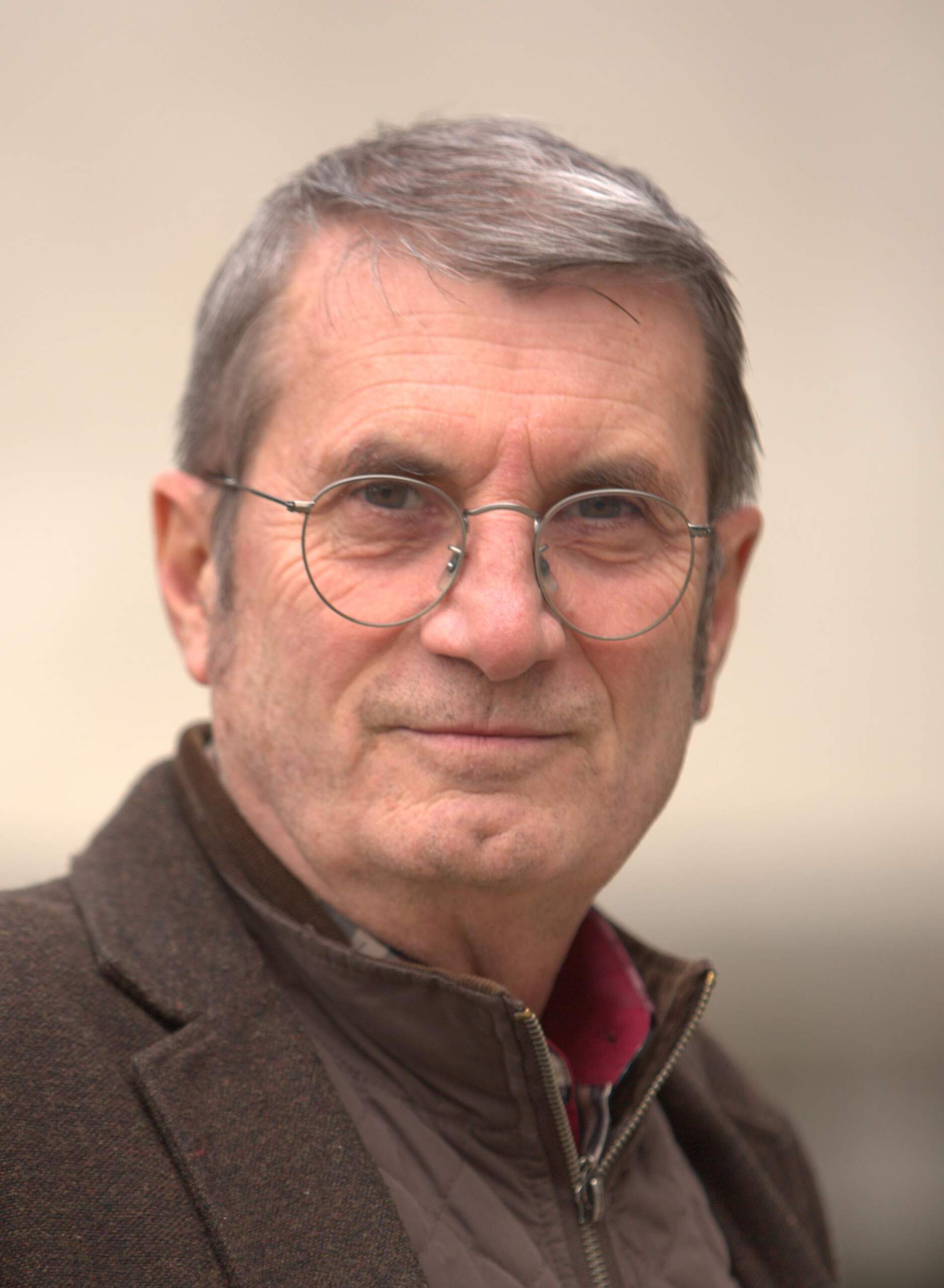
Prof. Hristo Hinkov was born on March 25, 1953, in Sofia, Bulgaria. He graduated in medicine in 1980. His career began as a General Practitioner and then continued in a regional psychiatric hospital, where he specialized in psychiatry. He also received further training in Belgium, the Netherlands, Denmark, Japan, and the USA. He has been a leader and participant in numerous projects and programs related to mental health and healthcare reform. He was one of the founders who restored the Bulgarian Medical Union in 1990. Prof. Hinkov has published extensively in the fields of public health, health reform, and mental health. From 2014 to 2022, he served as the director of the National Center of Public Health and Analyses. In 2023-2024, he served as the Minister of Health. Currently, he works in the Directorate of Mental Health and Prevention of Addictions at the National Center of Public Health and Analyses.
Title of the speech
Mental health in times of war and trauma
Abstract
The time we live in is filled with turbulent and fundamental changes affecting all areas of life. The historical parallels that emerge when observing the current global situation largely resemble the period between the two world wars, but they also have a number of specific characteristics related to technological progress and the latest scientific advancements, which have a direct impact on the mental health of modern people. They can be summarized as follows:
- The revolution in communications and the wave of over-information
- The emergence of artificial intelligence
- The disintegration of traditional civil society and the fragmentation of society into separate communication bubbles through social networks
- The growing threat of global conflict after the end of the Cold War and the threat of revision of post-war global security agreements
- The deepening discrediting of traditional science and the foundations of modern knowledge
- The impact of the COVID-19 pandemic and its consequences
All these factors exert various effects on the psyche of the modern person: overload of perceptions, disorientation, inability to adequately assess events, breakdown of established cognitive schemes, loss of empathy, de-realization, dehumanization, magical thinking, and the emergence of archetypal apocalyptic fears.
The clinical manifestation of these effects is various psychopathological symptoms and an increase in baseline or existential anxiety.
In the context of Bulgarian culture, anxiety manifests in a way that differs from Western European models. The anxious Bulgarian is not anxious according to the commonly accepted norms for exhibiting such a state. He conceals his anxiety, masks it with various strategies, does not allow himself to consciously acknowledge that he is anxious, and pays the price with psychosomatic illnesses, which places him among the leading ranks in global mortality. The COVID-19 pandemic clearly demonstrated that the hidden morbidity from anxiety disorders, whether masked or manifested through cardiovascular, oncological, or other psychosomatic illnesses under extreme conditions like a pandemic, increases mortality to global levels.
Contacts
Useful Information
Contact details of the legal entity:
GIP–Sofia Ltd.
VAT: BG202318570
Address: 1 Maliovitsa Str., 1000 Sofia
Email: sofia@gip-global.org
Tel: +359 2 987 7875